If you need a specific class and our calendar does not have what you need, please call and we will create or change a class as long as it doesn’t displace a student that is already signed up, and I am available to teach the class.
**The ACLS Provider Course is designed for individuals taking the course for the first time or for students that simply wish to take the entire course for enhanced learning and review.
**Student interested in the ACLS Update or Renewal course, must have a current card. A grace period of less than 30 days beyond the cards expiration date is accepted.
About
Advanced Cardiovascular
Life Support
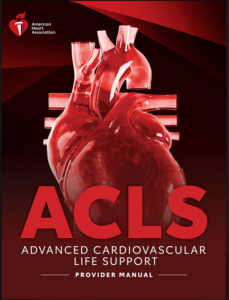
Advanced Cardiovascular Life Support (ACLS)
The American Heart Association’s ACLS course builds on the foundation of lifesaving BLS skills, emphasizing the importance of high-performance teams. The 2025 ACLS course reflects the new 2025 science and education from the American Heart Association Guidelines Update for CPR and Emergency Cardiovascular Care (ECC). Upon successful completion of the course, students receive a course completion eCard, valid for two years.
Please contact your employer to ensure that you are selecting the correct course.
Which course is right for me?
Advanced Cardiovascular Life Support (ACLS) Course Options
- Classroom with an instructor for both Provider and Update classes
- HeartCode blended (online at home) learning with classroom skills check
All ACLS course options teach the same American Heart Association science and result in the same ACLS Course Completion Card.
What does this course teach?
ACLS is designed for healthcare professionals who either direct or participate in the management of cardiac arrest, stroke, or other cardiopulmonary emergencies. This includes personnel in emergency response, emergency medicine, critical care/intensive care, and surgery such as Physicians, Nurses, and Paramedics, as well as others who need an ACLS course completion card for a job or other requirement.. Upon successful completion of the classroom instruction, students must pass the multiple-choice exam with a minimum score of 84%.
Topics include:
After successfully completing this course, students will be able to…
- Systematic approach (assessment)
- High-quality BLS
- Airway management
- Rhythm recognition
- Defibrillation
- Intravenous (IV)/intraosseous (IO) access (information only)
- Use of medications
- Cardioversion
- Transcutaneous pacing
- High-performance teams